Aluminium Foil Lidding: Barrier Properties, Substrates & Sealing Compatibility
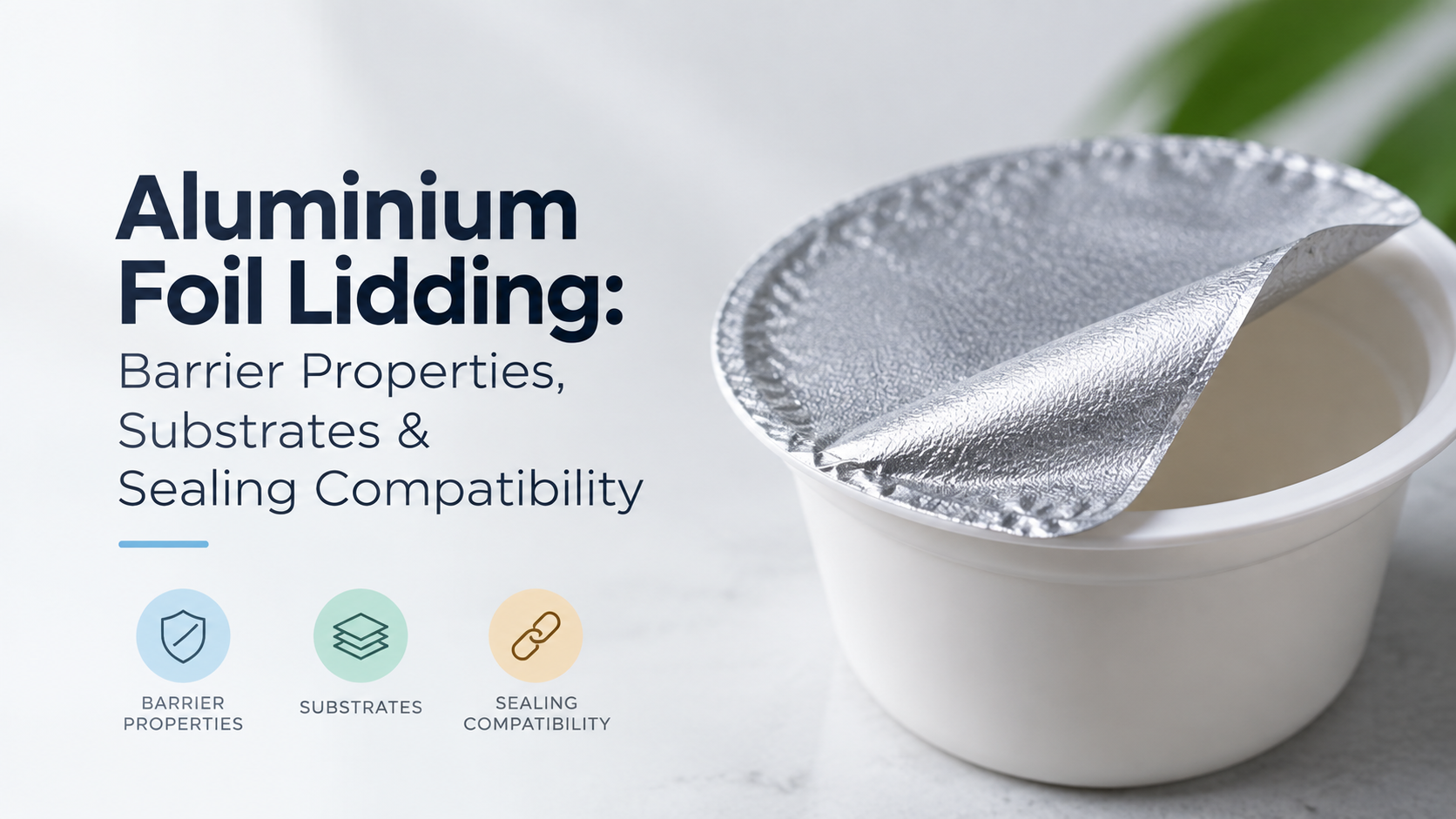
Aluminium foil lidding looks like a simple component, but getting the specification wrong shows up fast — as seal failures, shortened shelf life, or product spoilage on the line. Choosing the right lidding packaging means matching three things correctly: barrier performance, substrate/laminate structure, and sealing compatibility with your container. Here’s how to evaluate each.
What Is Aluminium Foil Lidding Packaging?
Lidding is the flexible material heat-sealed or peel-sealed onto the rim of a cup, tray, or container to close it. Aluminium foil lidding uses a thin aluminium layer — typically laminated with a sealant layer and sometimes a print/protective layer — to deliver a barrier against oxygen, moisture, and light that plastic-only lidding films generally can’t match on their own.
Common applications: dairy cups, ready-meal trays, pharmaceutical blister lids, single-serve portion packs, and industrial or chemical containers requiring a high-barrier seal.
Key Barrier Properties to Evaluate
Not all foil lidding is the same thickness or barrier grade, and the right specification depends entirely on the product inside.
- Oxygen barrier: Critical for products sensitive to oxidation — dairy, oils, and certain pharmaceuticals need a foil gauge and structure that limits oxygen transmission to a defined rate, verified against the manufacturer’s data sheet.
- Moisture barrier: Foil is inherently a strong moisture barrier, but the laminate structure around it (especially any paper or fiber layers) can compromise this if not specified correctly.
- Light barrier: Foil blocks light fully, which matters for light-sensitive contents like certain dairy cultures or pharmaceutical formulations.
- Foil gauge (thickness): Thicker gauges generally improve barrier and puncture resistance but add cost and can affect sealing dynamics — the right gauge should be matched to the product’s shelf-life requirement, not defaulted to the thickest option available.
Always request the technical data sheet for barrier performance (oxygen transmission rate, moisture vapor transmission rate) tied to the specific product grade — barrier claims should never be assumed from the material category alone.
Substrate & Laminate Structures
Foil lidding is rarely used as bare foil — it’s typically laminated to give it printability, stiffness, and the right sealant chemistry:
- Foil-PET laminates: Add stiffness and print clarity, commonly used for dairy and food trays.
- Foil-paper laminates: Used where a paper look/feel or specific peel characteristic is needed, common in some dairy and portion-pack formats.
- Coated foil (heat-seal lacquer): A heat-seal coating applied directly to foil for simpler, lower-cost structures.
- Peelable vs. weldable seal layers: Peelable structures are designed for easy consumer opening without tearing; weldable structures create a permanent, tamper-evident bond — the choice depends on the product’s expected shelf handling and any tamper-evidence requirements.
Sealing Compatibility
A lidding film is only as good as its seal to the container material. Mismatches here are one of the most common causes of production line issues.
- PP (polypropylene) trays/cups need a lidding sealant layer formulated for PP compatibility — typically a PP-based or compatible heat-seal coating.
- PS (polystyrene) containers require a different sealant chemistry than PP.
- PET trays/cups need sealant layers formulated specifically for PET adhesion.
- Sealing temperature and dwell time on your specific line equipment should be validated with a trial run — sealant performance varies by manufacturer and grade, even within the same base chemistry.
Before committing to a lidding specification, confirm seal integrity testing (peel strength, hermetic seal validation) on your actual container material and line settings — not just the lidding film’s data sheet in isolation.
How to Choose: A Quick Checklist
- Identify the product’s sensitivity (oxygen, moisture, light) and required shelf life.
- Match foil gauge and barrier grade to that sensitivity — request the manufacturer’s data sheet.
- Choose the laminate structure (foil-PET, foil-paper, coated foil) based on print, stiffness, and peel requirements.
- Confirm the sealant layer is formulated for your exact container material (PP, PS, or PET).
- Run a seal trial on your actual line before committing to volume.
Where Junish Fits
Junish sources aluminium foil lidding structures — including foil-PET, foil-paper, and coated-foil options — from qualified global manufacturers, helping converters match barrier grade, laminate structure, and sealant chemistry to their specific container and product requirements, backed by manufacturer-specific technical documentation.
FAQs
What’s the difference between peelable and weldable lidding seals?
Peelable seals are designed to open cleanly without tearing, typically used for consumer convenience. Weldable seals form a stronger, more permanent bond, often used where tamper evidence or a higher seal strength is required. The choice depends on the product’s handling needs and any regulatory tamper-evidence requirements.
Can aluminium foil lidding be used on both PP and PET containers?
Yes, but the sealant layer must be formulated for the specific container material — a sealant designed for PP will not necessarily perform the same way on PET. Always confirm compatibility with the manufacturer before specifying.
How do I know what foil gauge I need?
Foil gauge should be matched to your product’s oxygen, moisture, and light sensitivity and target shelf life, not chosen by default. Request barrier performance data (oxygen and moisture transmission rates) for the specific grade from your supplier.
Does thicker foil always mean better barrier performance?
Generally yes for barrier resistance, but thicker gauges add cost and can change sealing dynamics on your line. The right gauge balances barrier need against cost and production compatibility — it shouldn’t be assumed to be “the thicker, the better” for every application.
Related Blogs
No related posts found.