Cost vs. Quality in Aluminum Foil Sourcing: Hidden Expenses and How to Avoid Them
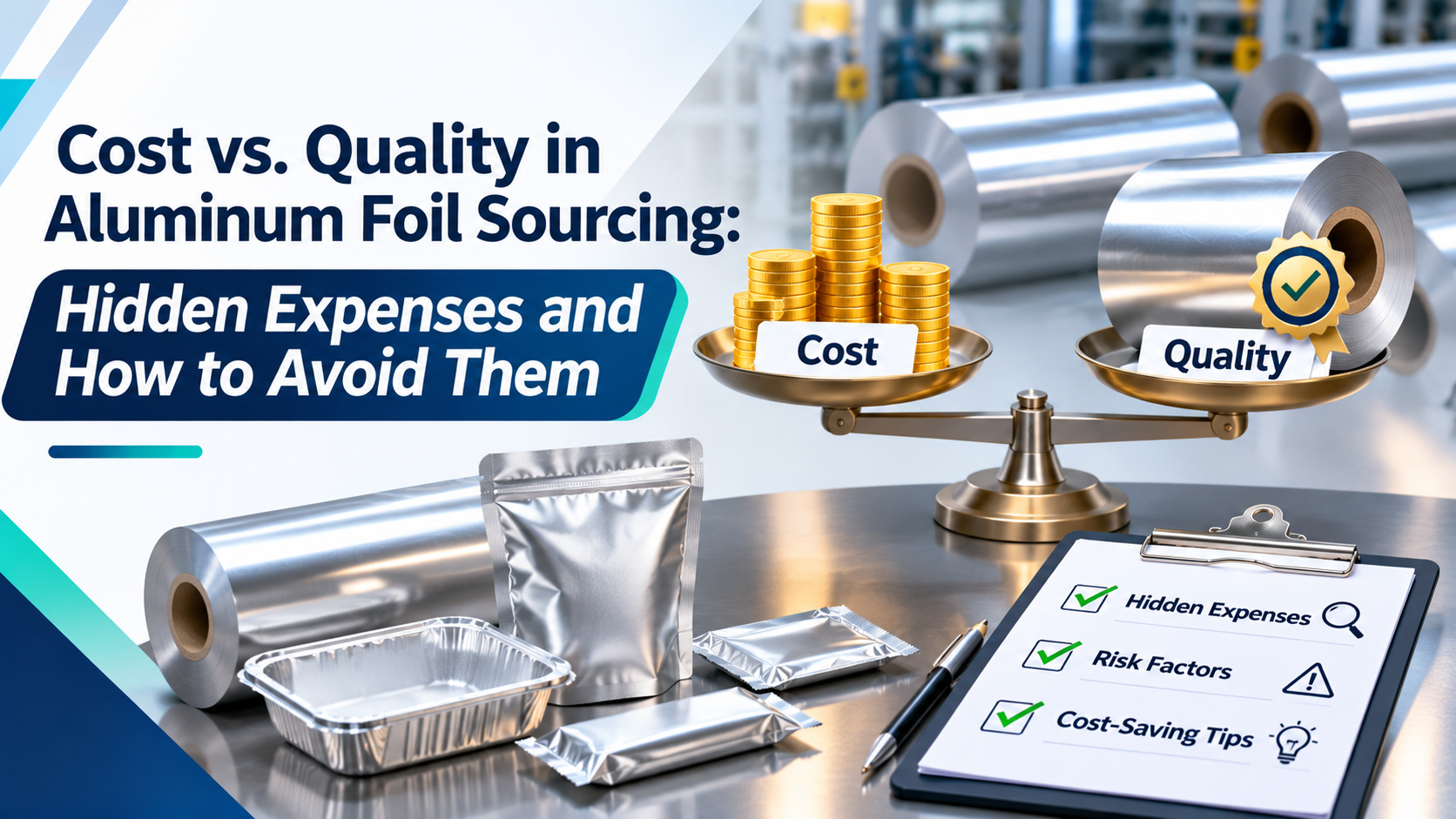
Saving two-tenths of a cent per pouch on paper-to-foil laminates looks impressive on a quarterly spreadsheet. When substandard barrier integrity ruins an entire production run of sensitive products, that cheap sourcing decision multiplies operational expenses tenfold. Evaluating outsource aluminum foil packaging costs requires a rigorous shift from invoice pricing to the true aluminum foil packaging total cost of ownership.
The Anatomy of Foil Packaging Costs: Upfront vs. TCO
Procurement teams often fall into the trap of measuring value solely by the price per square meter. In reality, purchasing cheap foil introduces systemic vulnerabilities across the manufacturing floor.
The table below highlights the stark contrast between superficial savings and total financial exposure.
| Cost Dimension | Upfront Sourcing Metric | Total Cost of Ownership (TCO) Reality |
| Material Unit Price | Low initial cost per meter | High scrap rates and wasted raw materials |
| Line Efficiency | Assumed standard running speed | Frequent machinery jams and unexpected downtime |
| Product Integrity | Basic certificate of analysis | Moisture ingress, oxidation, and complete batch spoilage |
| Logistics & Compliance | Low baseline freight quotes | Air-freight expediting penalties and regulatory fines |
The 4 Hidden Expenses of Low-Quality Foil Sourcing
Cutting corners on specialized flexible packaging triggers cascading failures throughout your supply chain. Here are the four hidden expenses that drain corporate profitability.
1. Pinholes, Micro-Cracks, and Barrier Failure
Poor rolling mills or substandard metallurgy create microscopic defects in thin-gauge foils. These invisible cracks allow moisture, oxygen, and ultraviolet light to penetrate sensitive food or pharmaceutical goods. A compromised barrier turns high-value sterile items into unusable waste before they ever reach a distribution center.
2. Inconsistent Gauge & Temper Variations
Non-uniform thickness and improper metal temper cause absolute chaos on high-speed vertical form-fill-seal machinery. When foil stretches unevenly, heat seals fail, packages rupture during sealing jaw impact, and packaging lines grind to a halt. Every minute of unplanned downtime burns labor capital and delays downstream customer deliveries.
3. Supply Chain Volatility & Expedited Freight Penalties
Low-cost overseas vendors often operate on brittle supply chains with zero buffer stock. When local factory disruptions or port congestions hit, shipments stall for weeks. To prevent stockouts on retail shelves, procurement teams are forced to absorb exorbitant air-freight penalties that completely wipe out annual savings.
4. Regulatory Rejections and Compliance Penalties
Exporting packaging materials into strictly regulated markets demands absolute adherence to migration limits. Substandard foil suppliers often use low-grade recycled solvents or improper coatings that leave toxic residues on food contact surfaces. Regulatory rejections at port customs result in total product impoundment, heavy fines, and severe brand damage.
How to Calculate True Value When Vetting Sourcing Partners
Moving past the lowest-bidder mentality means upgrading how you evaluate potential manufacturing partners. Financial and procurement leaders should demand hard metrics that reflect real operational reliability.
- On-Time-In-Full (OTIF) Rates: Prioritize suppliers maintaining a consistent 98 percent or higher OTIF track record to eliminate stockout risks.
- Defects Per Million Opportunities (DPMO): Look for rigorous inline inspection systems that keep defect metrics near zero.
- Batch Traceability: Ensure every master coil is traceable from raw metal sourcing to final slitting.
- Consignment Warehousing: Partner with vendors who maintain local safety stock to insulate your facilities from global freight shocks.
A Strategic Framework for Balancing Cost Efficiency with Uncompromising Quality
Optimizing your packaging expenditure requires a deliberate, step-by-step operational realignment. Implement this three-step framework to secure your margins.
- Shift from Unit-Cost KPIs to Defect-Free Throughput KPIs: Reward procurement teams based on finished packaged goods shipped successfully, not raw material purchase discounts.
- Audit Upstream Manufacturing Standards: Inspect your vendor’s hot rolling, cold rolling, and annealing processes to guarantee structural integrity.
- Partner with Established Specialists: Collaborate with proven manufacturers like Junish who engineer custom packaging solutions tailored to exact operational tolerances.
Ready to eliminate hidden operational losses and secure your packaging supply chain? Explore Junish’s Specialised Solutions portfolio to engineer high-performance, cost-efficient aluminum foil packaging.