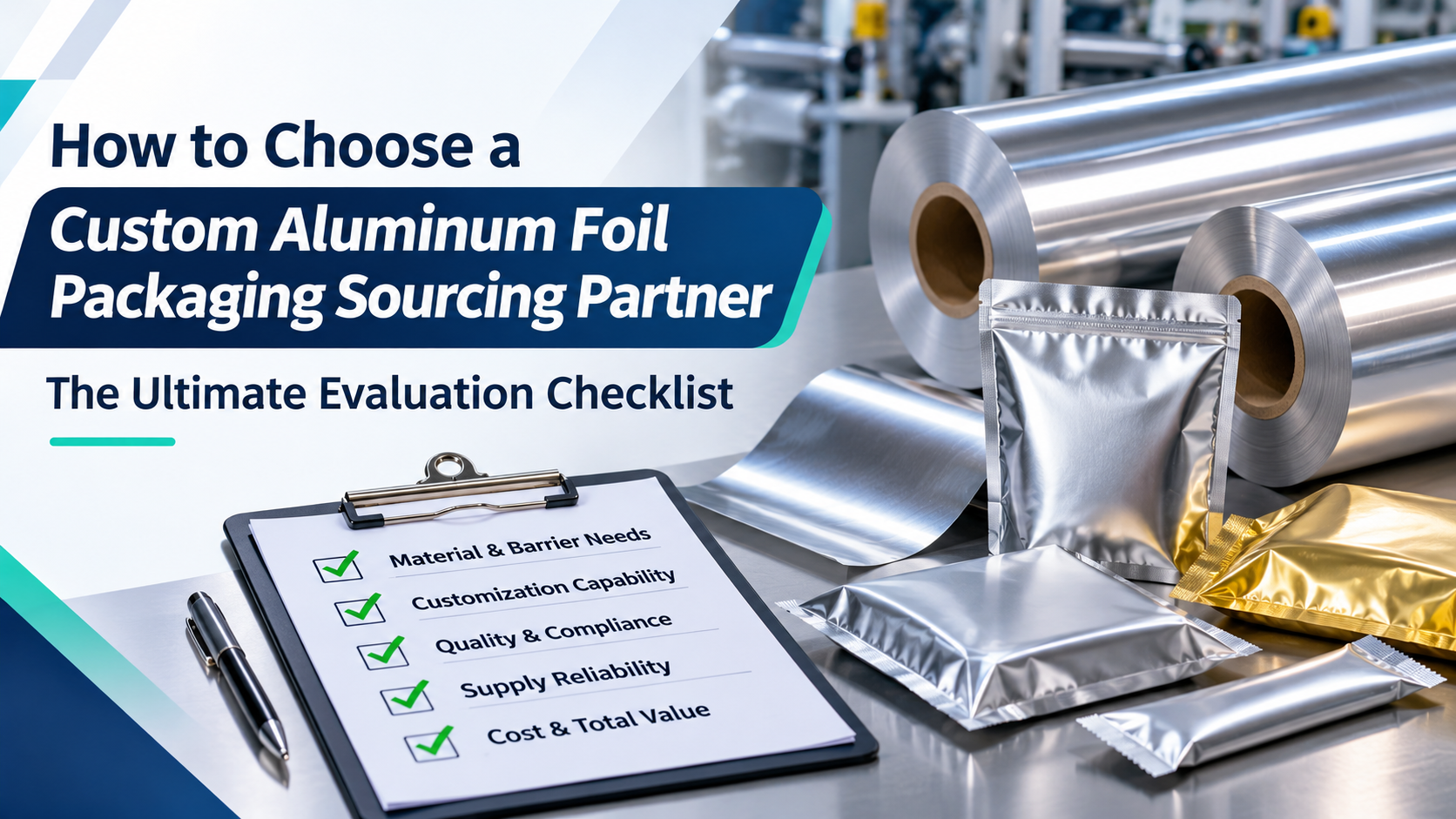
How to Choose a Custom Aluminum Foil Packaging Sourcing Partner: The Ultimate Evaluation Checklist
In high-stakes packaging applications across the pharmaceutical, food, and industrial sectors, a sub-par foil supplier does not just delay shipments—it causes barrier failure, product degradation, and catastrophic brand erosion. Securing a reliable custom aluminum foil packaging sourcing partner requires moving away from transactional, low-bid vendor hunting toward resilient, agile global partnerships that prioritize technical precision. Junish bridges rigorous technical foil engineering with robust supply chain agility to protect your enterprise assets.
Why Traditional Packaging Vendor Selection Fails Today
Relying solely on digital directories or lowest-per-unit price models creates systemic operational risks. When supply chain disruptions hit, single-source vendors collapse under pressure, leaving production lines stranded.
Modern supply chain volatility demands partners with multi-tier sourcing networks and localized risk mitigation strategies. Price tags mean nothing if the foil fails pinhole tests or compromises moisture barriers mid-transit. Procurement teams must look past superficial unit costs and evaluate structural capability.
The 6-Point Evaluation Checklist for Custom Aluminum Foil Sourcing
Evaluating enterprise-grade suppliers requires a rigorous, objective framework. Use this 6-point checklist to audit your current and prospective vendors.
1. Technical Customization & Engineering Capabilities
Can the supplier handle custom alloys, exact tempers (from soft annealed O temper to hard H18), precise gauges, and specialized laminations like PE, PET, and paper?
Your packaging demands exacting specifications. Look for proven capabilities in custom embossing, rotogravure printing, and multi-layer barrier coatings tailored to aggressive chemical or food environments.
2. Quality Assurance & Regulatory Compliance
Certifications are non-negotiable baselines. Verify ISO standards, FDA compliance for food-contact materials, Good Manufacturing Practices (GMP), and REACH compliance.
Ask for hard data on rigorous testing protocols. Suppliers must execute pinhole detection scans, seal strength tests, and moisture vapor transmission rate (MVTR) assessments on every production batch.
3. Global Sourcing Agility & Supply Chain Resilience
A robust vendor maintains a diversified global supplier network to eliminate single-point-of-failure vulnerabilities. Geopolitical shifts and port congestion will break rigid supply chains.
Top-tier partners offer strategic warehousing or consignment inventory models. These buffers absorb lead-time shocks and guarantee continuous plant operations.
4. Lead-Time Reliability & Scalability
On-Time In-Full (OTIF) delivery metrics separate elite partners from mediocre vendors. Ask for historical OTIF data over the past eight quarters.
Additionally, verify their capacity to scale production dynamically. They must transition smoothly from small pilot runs to high-volume enterprise rollouts without sacrificing quality control.
5. Dedicated Client Service & Engineering Support
Automated helpdesks and distant customer service reps fail when manufacturing lines jam. You need direct access to dedicated account managers and seasoned packaging technologists.
Collaborative troubleshooting during prototyping and line trials saves weeks of downtime. Your supplier should sit on your side of the table during product development.
6. Sustainability & Material Innovation
Environmental regulations tighten every quarter. Your packaging partner must offer recyclable monomaterial structures and down-gauged foils that preserve barrier integrity without adding bulk.
Evaluate their R&D investments in eco-friendly water-based coatings and solvent-free laminations. Sustainable packaging must never compromise product shelf-life.
Red Flags to Avoid When Vetting a Foil Packaging Supplier
- Vague material specifications: If a vendor hesitates to disclose exact alloy grades or coating weights, walk away immediately.
- Lack of batch-level traceability: Inability to trace defective rolls back to specific raw material lots exposes your brand to massive recall liabilities.
- Inflexible Minimum Order Quantities (MOQs): Rigid volume demands lock up your working capital and stall new product launches.
- Poor lead-time communication: Vague shipping estimates and missed milestone updates signal weak operational control on the factory floor.
Ready to upgrade your packaging supply chain? Consult with the Junish team today for a tailored packaging audit and build a resilient sourcing strategy. Visit Junish Specialised Solutions to connect with our packaging engineers.